
Covivio Newsletter
Understanding tomorrow's city
- Find out all the Covivio news every month
- Discover our latest projects: offices, residential, hotels
- Decipher the city and its challenges with our Expert Views



Experts

Covivio
New windowAre rooftops neglected spaces in the city? Not anymore: in Paris, rooftop development is helping to tackle urban challenges. Roofs offer new spaces while limiting land artificialisation, helping buildings adapt to climate change and preserving nature within the city.
When nature and the city are no longer at odds
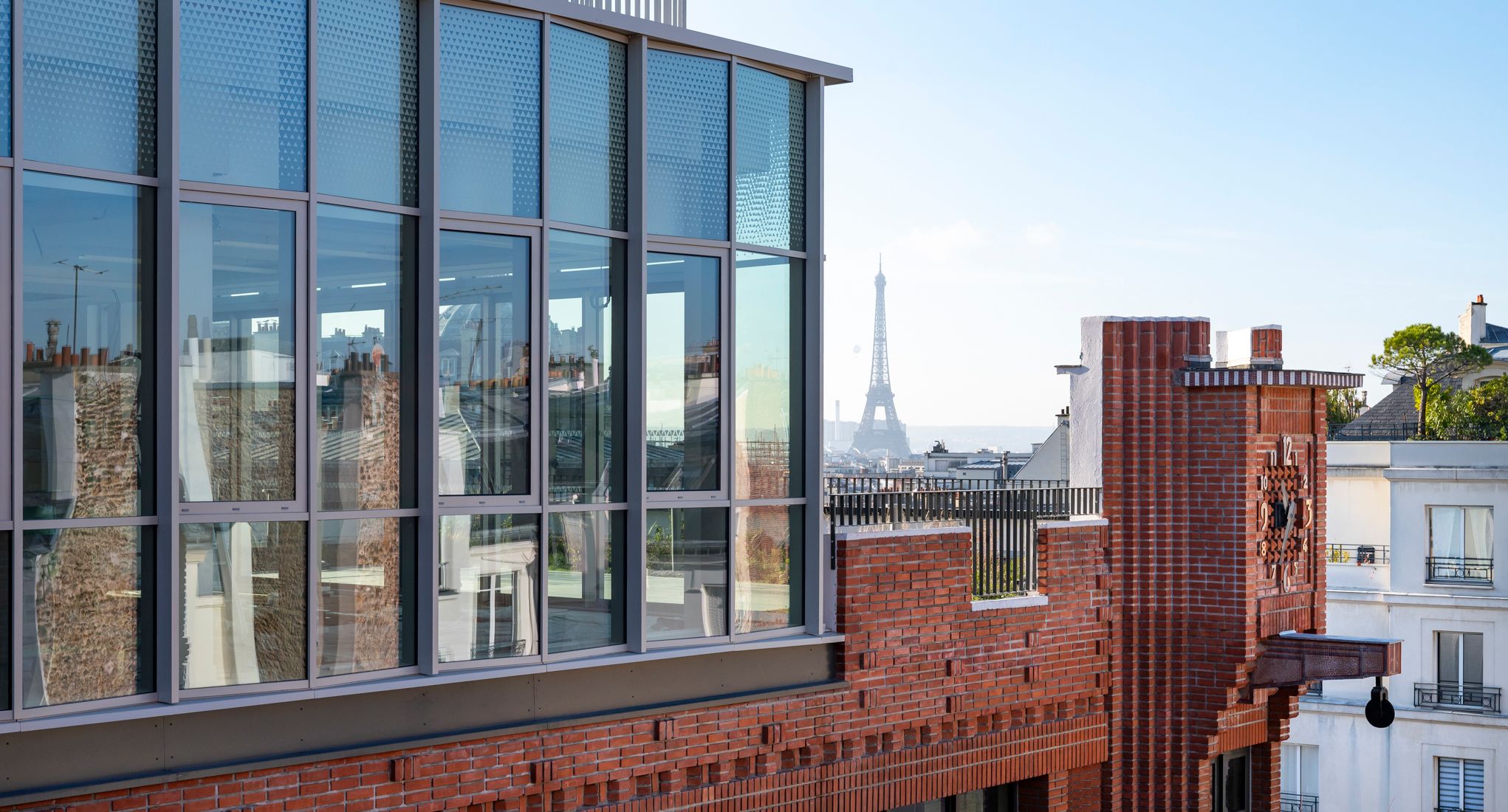
L’Atelier, Covivio’s European headquarters located in the Saint-Lazare district of Paris, is leading the way. Its rooftop is home to a hanging garden, with a selection of species adapted to the sunny and dry conditions. It is a place whose benefits are not only enjoyed by the people who come to relax and enjoy its cool oases.
It also serves as a refuge for biodiversity in a densely populated area, recreating ecological continuity with the surrounding green spaces. Thus, one year after the site was delivered, eighteen different species of fauna have been identified there (birds, butterflies, insects and bees). Finally, the intelligent management of rainwater and thermal regulation made possible by these green spaces are beneficial to the building itself, improving its resilience to extreme weather events and reducing the building’s air conditioning needs.
In cities, square metres are precious, and collective leisure activities can suffer as a result. Designing rooftops that can accommodate activities is one way of meeting this challenge. On the seventh floor of the Mercure Paris Boulogne hotel, a rooftop is open from May to October, featuring a bar (the Seven Up) and a swimming pool. The space is accessible to hotel guests at all times, as well as to the public for private hire or events. Theme nights are organised twice a month: Latin, Italian, jazz, Boulogne designers’ market and local artists’ exhibitions.
Our success is seeing our guests have a good time at our hotel
Jean-Sébastien LAURENT, General Manager of the Mercure Paris Boulogne Hotel
Building rooftops are also becoming productive spaces.
The Stream Building, in the heart of the Clichy-Batignolles district in Paris, is a good example. Its terrace is home to 385 square metres of photovoltaic modules, which cover around 10% of the building’s electricity needs, as well as a 300-square-metre vegetable garden, which supplies the building’s restaurants with fresh vegetables. This system has been integrated into all new developments carried out by Covivio in Italy for several years, notably its Milanese buildings Symbiosis A and B, which produced 51MWh in 2024, and The Sign, which generated 59MWh. For the past 10 years, the second part of the roof of the Mercure Hotel Boulogne has been home to an urban hydroponic vegetable garden that produces between one and one and a half tonnes of fruit and vegetables per year, which are used directly in the kitchen of the adjoining restaurant.
Of course, adding more weight to the roof requires special attention. The renovation of the roof of the Mercure Paris Boulogne hotel in 2016 was accompanied by strict specifications to meet the technical standards for the addition of the swimming pool.
These design challenges were mastered by a team of developers, specialist engineers and landscape architects, enabling us to enjoy the rooftops for many years to come.