

Covivio Newsletter
Understanding tomorrow's city
- Find out all the Covivio news every month
- Discover our latest projects: offices, residential, hotels
- Decipher the city and its challenges with our Expert Views



Experts


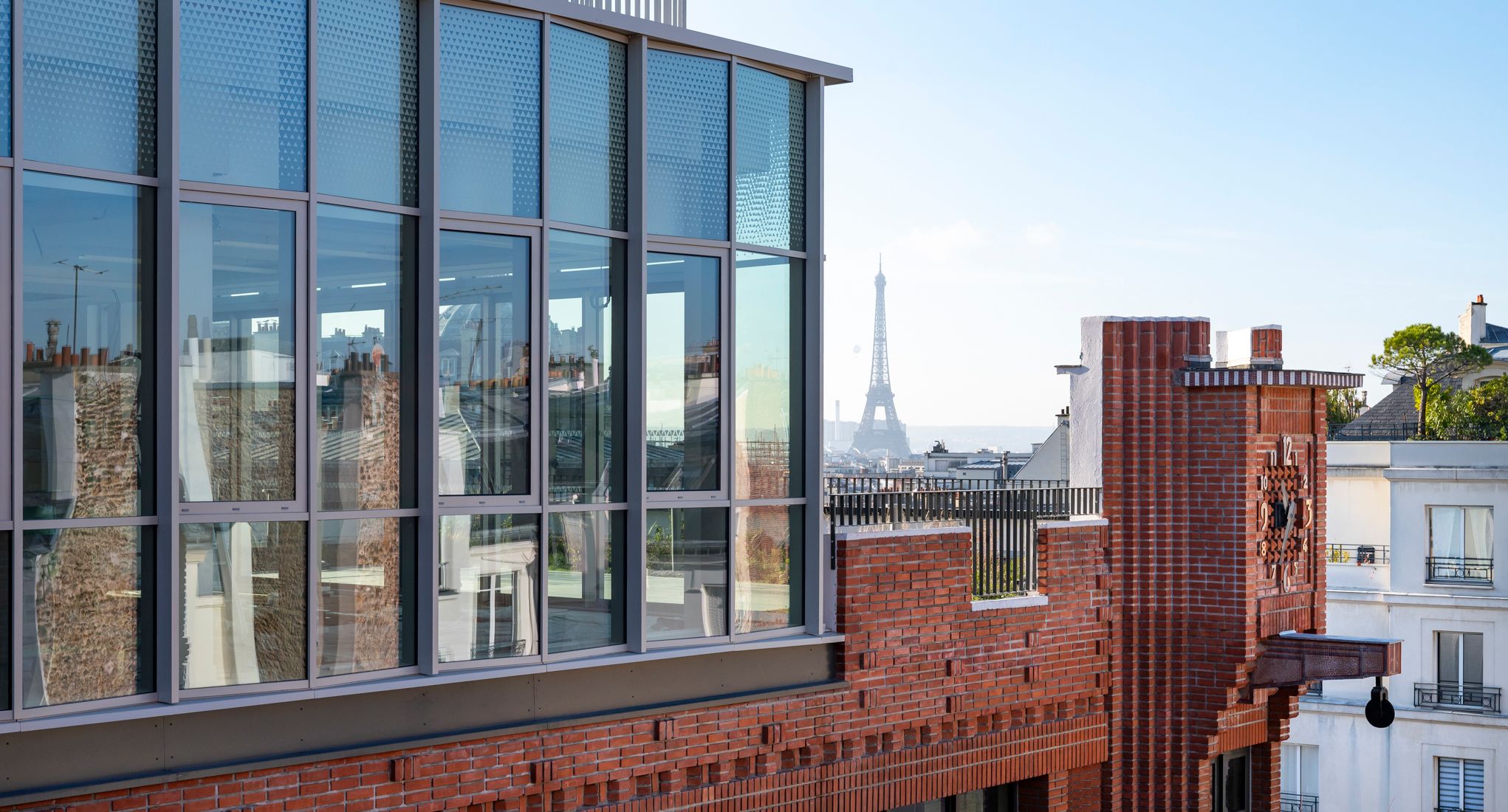
Reusing rather than buying new, repurposing rather than throwing away. On the Azur project – a building of nearly 38,000 m² tailor-made to support Thales’ Land and Air Systems (LAS) operations – reuse has gone beyond mere intention. Recycled paint, reused raised floors, ventilation ducts sourced from second-life supply chains, and the reuse of landscaping materials: the construction site has carried out a wide range of experiments to reduce its environmental impact. A pioneering project that illustrates how Covivio is evolving its construction and renovation practices, and integrating reuse into its real estate projects.
Marine Renaud, Development Project Director, Covivio: There are still several barriers to the circular economy and, in particular, to the reuse of materials, starting with regulations and insurance. Once a material or piece of equipment has already been used, its quality, compliance and durability must be guaranteed. This can limit the possibilities, particularly for components subject to heavy wear and tear.
Reuse also still sometimes suffers from a ‘second-hand’ image, as if it were simply a matter of salvaging old or damaged items. Yet this is not the case: materials are selected, sorted and reconditioned. Once refurbished, they can offer the same level of quality and guarantee as a new product.
Marine Renaud: The Azur project began back in 2020, at a time when reuse was even less of a consideration than it is today. We hadn’t set any very specific targets on this issue from the outset. Instead, the approach developed gradually as the project progressed.
Nicolas Moreau, Sustainable Development Project Manager, Covivio: Azur is not subject to the RE2020 regulations as the project began before they came into force. Nevertheless, we wanted to adopt an equivalent voluntary approach, particularly to improve the life-cycle analysis and reduce the project’s carbon footprint. Building on initial experiences gained from previous Covivio projects, re-use emerged as an interesting avenue to explore in collaboration with the project’s stakeholders.
Alexis Gastinne, Development Project Manager, Covivio: We also benefited from a very favourable environment with Thales, which was not at all reluctant to adopt this approach. Components located in areas not visible to staff or clients were approved, and we were able to discuss the more visible components with the client.
Eiffage, the main contractor on the project, also played an important role: the company provided a dedicated circular economy officer on site, who, in particular, identified various sources of reusable materials and proposed solutions that we hadn’t necessarily considered at the outset.
Marine Renaud: Among the most significant experiments was the reuse of ventilation ducts. The initial aim was to recover five kilometres of ducting, but we ultimately found enough to install around 1.2 kilometres. This is still a significant quantity and, above all, an interesting experience, as we had to source materials from various building sites.
We also reused raised flooring, gravel and concrete slabs from external building sites. The toilet doors are another example: around 350 door panels were reused, then covered with a new laminate finish to meet the client’s requirements. The result is fully integrated into the fit-out: it is impossible to tell these doors apart from new ones.
Alexis Gastinne: Another interesting example is that of millstone. During the earthworks, large blocks of millstone were excavated. Rather than disposing of them, they were kept on site, cleaned and reused in the project’s landscaping. This is a particularly commendable form of reuse, as it allows a resource already present on site to be reused directly.
Marine Renaud: That’s the crux of the matter. Reuse is still largely a matter of opportunity. The right material needs to be available at the right time, in the right quantity and of the right quality.
Take sanitary fittings, for example: we’d identified this avenue, but we couldn’t find a sufficiently large supply when we needed it. And if the material becomes available too early, we need to be able to store it. This therefore requires proper logistical organisation.
Conversely, some materials are now relatively easy to source. This is the case with raised access flooring and paint, for which supply chains already exist. The aim is therefore to gradually build up a sort of foundation of solutions that can be systematically integrated into projects, and then to seize opportunities as they arise.
Marine Renaud: Often, yes, reuse does cost more. This is an important point to explain. New construction benefits from highly standardised and industrialised supply chains. In contrast, reuse involves locating sources of materials, carefully dismantling the components, transporting them, possibly storing them, and then sorting and reconditioning them. All these stages come at a cost.
Nicolas Moreau: The challenge, therefore, is also to help create and structure these supply chains. The more re-use is practised, the more stakeholders there will be and the better organised the processes will become. Ultimately, the aim is not necessarily for re-use to be systematically cheaper than new products, but for it to become economically comparable.
Alexis Gastinne: The first lesson is that we need to foster collaboration between building sites. The best-case scenario is sometimes when a material is available at a demolition site just a few kilometres from a construction site, at exactly the moment the latter needs it. The raised floor recovered from a site in Vélizy is a good example of this. It was cleaned and reused immediately on the project.
Marine Renaud: Reuse is a cross-functional skill that teams acquire, consolidate and build upon as projects progress. We have already started working in this way, by sharing experiences between teams and sites. The idea is to make reuse a natural part of projects, rather than a one-off initiative.
Nicolas Moreau: Yes, even if not all projects yield spectacular gains. Reuse helps to reduce the need for new resources and can also minimise transport when material sources are local. The circular economy is, in fact, one of the key drivers identified in our analysis of nature-related impacts, risks and opportunities.
It takes conviction to embark on reuse. The conviction that by helping to drive a reuse approach today, the sectors will organise themselves to improve the identification of sources and the profitability of these operations compared to new materials.
Alexis Gastinne: Finally, there is a cultural shift that needs to be supported. Reuse must not be seen as a constraint or as a second-best solution. It is a new way of approaching projects, which requires thinking differently about materials, their availability and their lifespan.
Marine Renaud: And even when a project does not yield significant environmental benefits, it remains a worthwhile approach. Every project enables us to make progress, gain experience and develop best practice. It is this accumulation of experience that will, in the future, enable us to move from an opportunistic approach to a more structured circular economy.