
Covivio Newsletter
Understanding tomorrow's city
- Find out all the Covivio news every month
- Discover our latest projects: offices, residential, hotels
- Decipher the city and its challenges with our Expert Views



Experts
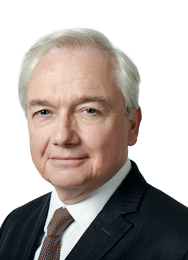

Faced with the environmental emergency, building construction and renovation are being reinvented. Recycling and reusing products and equipment, using bio-based materials... At the heart of this sustainable transition, Covivio is stepping up its initiatives to reduce the carbon footprint of its real estate projects. Jean-Eric Fournier, Director of Sustainable Development, and Vincent Floquet, Deputy Technical Director, explain.
Jean-Eric Fournier. These issues are central to our group’s thinking, and we have implemented a proactive approach to address them. In particular, this approach aims to reduce our carbon footprint, with a target of reducing our greenhouse gas emissions by 40% between 2010 and 2030. This involves, among other things, conducting an in-depth review of how we construct and renovate our buildings, the materials we use and those we can give a second life to.
Vincent Floquet. This strategy has led to numerous initiatives within our projects. In particular, we incorporate bio-based materials from our environment into our buildings. This is particularly the case with wood and its many forms (solid, fibre, etc.). We use them as insulation, in the structure of buildings or in the form of coverings (parquet flooring, stairs, etc.).
Vincent Floquet. Many materials can be reused or recycled as part of a circular economy approach. For example, old glass removed during demolition work can be crushed and used to manufacture new low-carbon glass. Projects have been carried out in this vein on the ‘Beige’ and ‘The Line Miromesnil’ buildings in Paris. On the latter site, 100% recycled aluminium frames from deconstruction were also installed. In the same vein, we seek to renovate certain installations rather than replace them entirely. We have retrofitted fan coil units[1] on the Dassault Systèmes campus in Vélizy and are doing the same on our CB 21 tower in La Défense.
Does the integration of circular economy approaches involve a change in your professional practices?
Vincent Floquet. Absolutely! Our real estate assets represent a veritable treasure trove of materials that can be reused. When a decision is made to demolish a building, we will now audit it with particular attention to determine the potential of the materials present. This also requires our teams to develop their skills so that they are familiar with the possible outlets and existing channels.
Processes are also evolving on construction sites where recycled materials and equipment can be deployed. We need to go through testing phases to ensure the reliability of the solution we want to implement, but also to gradually remove the various existing obstacles (in terms of technology or insurance, for example). It is this strategy of small steps that will ultimately enable us to achieve large-scale deployment. This can be seen in particular in the reuse of raised floors. We began experimenting with this in 2018. Today, it is a mature solution that is deployed on all our construction sites.
Jean-Eric Fournier. We have developed lively and very direct exchanges with various companies in order to roll out these circular initiatives. For example, Covivio has held discussions with glass specialist AGC Glass Europe and aluminium joinery specialist Wicona so that experiments in recycling can be carried out. We also follow the activities of players such as the collaborative platform Sekoya, which presents various sustainable solutions to professionals in the construction sector. It was during these discussions that we discovered the recycled paint offered by a start-up, Circouleur, which we have used on several occasions.
Vincent Floquet. To make progress in circular economy initiatives, it is essential to be curious, to engage in dialogue and to seek innovative solutions. We therefore talk to architects, project managers and construction companies. We are also interested in proposals from start-ups. One of them, SmartBack, which specialises in furniture recycling, assisted us with an audit of a hotel in Le Touquet prior to renovation work. We carried out a detailed inventory and found outlets for all the equipment listed.
Jean-Eric Fournier. This question needs to be analysed over the long term. During the experimental phases, costs may be slightly higher. But at the same time, this is a valuable learning period for our teams. With the gradual development of circular practices, prices will fall. And recycled products will become even more competitive in the future as certain raw materials become depleted, meaning that some new materials will become increasingly rare and, as a result, increasingly expensive.
Jean-Eric Fournier. One of the priorities will be to ensure the continuous availability of recycled materials. The flow must be constant. This requires significant structuring: a chain of actors must be identified, sectors organised and collection circuits controlled. These developments will be necessary to continue to attract a growing number of companies to circular practices.
[1] The process of replacing old or obsolete components with newer ones, usually by changing the technology, without altering the function.