
Covivio Newsletter
Understanding tomorrow's city
- Find out all the Covivio news every month
- Discover our latest projects: offices, residential, hotels
- Decipher the city and its challenges with our Expert Views
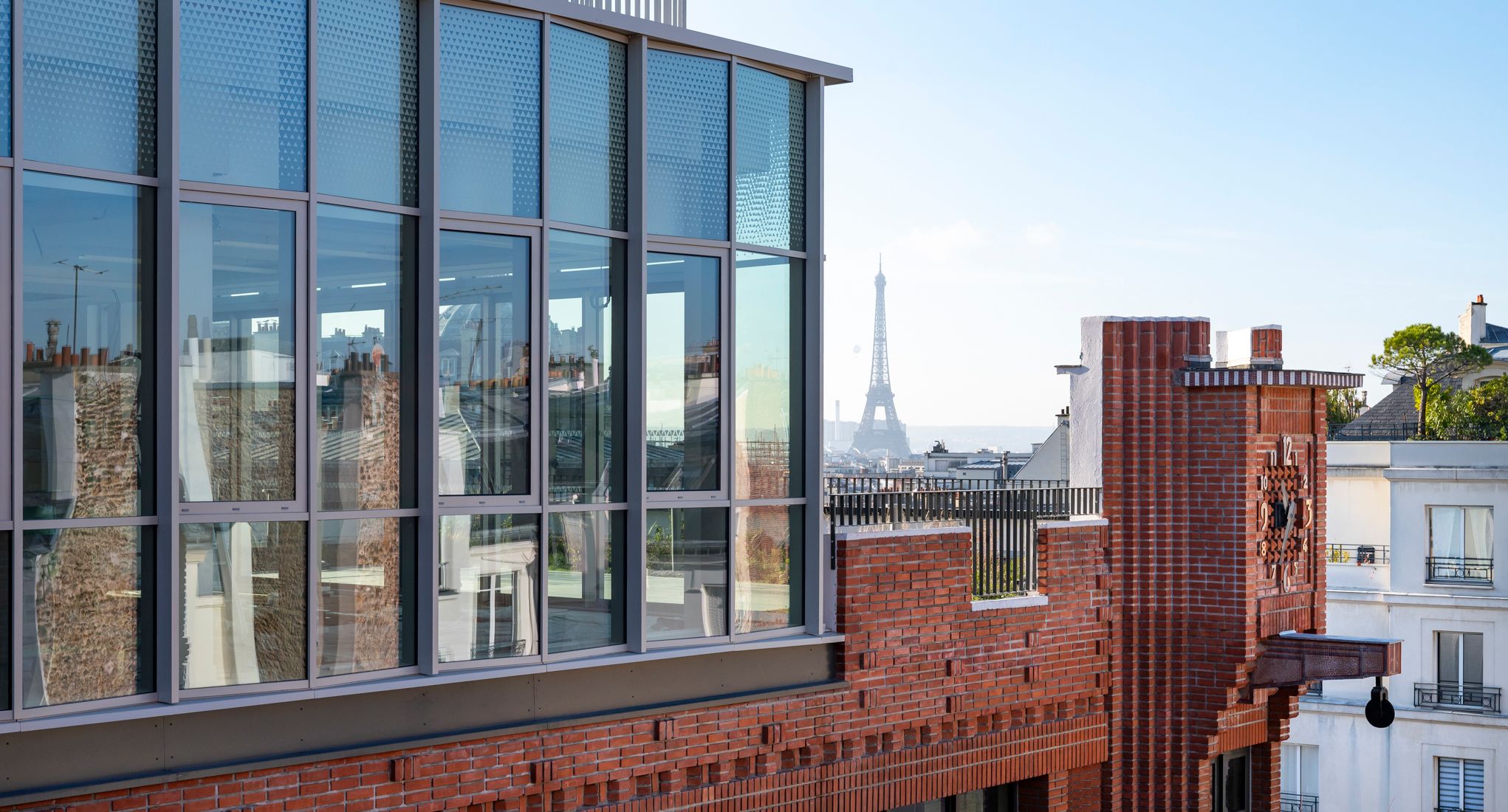

Over the last thirty years or so, digital technology with its promise of efficiency, experience and personalisation has gradually become an integral part of building management. So where are we today with this transformational change that has every floor of the building in its grasp? That's the question we put to David Esseryk, Founder of HDC Hospitality, and Antoine Gauvenet, Project Manager IT & Smart Building Design at Covivio.
ANTOINE GAUVENET — The development of digital technology has been based on three priorities: simplifying the lives of occupants, monitoring building operation and reducing building energy impact. The backbone of a Smart Building is its IT infrastructure, which must be accessible to, and shared by, every technical work package. This sharing of IT networks is what enables us to deliver solutions consistent with achieving those three priorities.
DAVID ESSERYK — Digital technology has become the structural framework of the entire hospitality industry. It has allowed the sector to evolve from a series of bespoke local business to a global, connected and personalised industry. The big change for buildings is the fact that we have progressed from a technology that delivers media content or enables connected minibars to a technology that, in today’s world, must interface with guest technology.
D. E. — We’re now captive to the standardisation of user preferences. Smartphones have become the universal tool for user journey delivery. Every smartphone service we offer must work with these smart phone apps.
A. G. — In practical terms, we’re looking to centralise all our solutions, from concierge services to reservations, meals, etc., into a single hub we refer to as the ‘building remote control’. At Covivio, that means whenever there is a potentially sensitive issue around reception or management, there’s always someone we can talk to. And it’s a conscious desire on our part to protect and promote the opportunity for human contact.
D. E. — AI is the next technological step change. I’m talking here about a hyper-predictive AI capable of anticipating user questions and solving their problems. This then raises issues around digital identity. How can we ensure that the system can recognise an individual with 100% certainty and security before guiding them at every step of their digital pathway before, during and after their stay?
A. G. — In this context, we hear a lot about the BOS or Building Operating System. In simple terms, it’s basically an operating system – like your iPhone iOS – that enables all the building’s third-party services to communicate with each other and automate certain use cases. Examples include identifying someone as they enter a building, greeting them with a personalised message and opening their pre-heated, pre-booked meeting room. When it comes to customising and automating solutions, you can pull out pretty much all the stops. BOS is also valuable for its ability to optimise energy consumption. Integrating the functions of the building allows us to manage it more efficiently and effectively.
At a time when the real estate sector is seeking to reconcile technological progress with respect for the environment, smart buildings appear to be the answer to energy and societal challenges. These intelligent buildings are establishing themselves as essential levers in the transition to sustainable and connected cities.
A smart building is a construction in which advanced technologies and building management systems (BMS) improve occupant comfort while optimising energy consumption and reducing the environmental footprint.
These buildings aim to combine well-being, safety and energy performance through intelligent systems capable of learning and adapting to user habits.
Thanks to home automation and connected sensors, lighting, indoor temperature and air quality are adjusted in real time according to human presence and external conditions.
The data collected continuously enables more precise energy management, reducing costs and environmental impact. But green and sustainable buildings go beyond energy efficiency: they encompass water and waste management and integrate harmoniously into smart cities and commercial buildings.
Smart buildings play a key role in reducing carbon footprints. Their energy management systems optimise consumption, promote the use of renewable energies and integrate with smart grids.
Predictive maintenance keeps building equipment in optimal condition, extends its lifespan and limits costs, thereby supporting the sustainability of buildings.
Covivio has been developing its smart building expertise for several years and designs “smart ready” buildings that offer optimal comfort to occupants.
These buildings offer:
These approaches are part of a broader urban logic: the integration of buildings into smart cities. Connected to smart networks, buildings become producers, storers and redistributors of energy, actively participating in the energy balance of cities.
Smart buildings put technology at the service of people. By improving comfort and connectivity, they promote productivity and quality of life.
Covivio offers intuitive solutions that are accessible to all, based on the BYOD (Bring Your Own Device) principle. This allows every occupant to easily connect to the building’s infrastructure.
Smart building services are entirely designed, implemented and managed by Covivio in its multi-tenant buildings:
Example: L’Atelier, Covivio’s European headquarters (6,500 m²), illustrates this expertise. A true example of comprehensive smart building architecture, it also serves as a testing ground for refining the model and inventing the solutions of tomorrow.
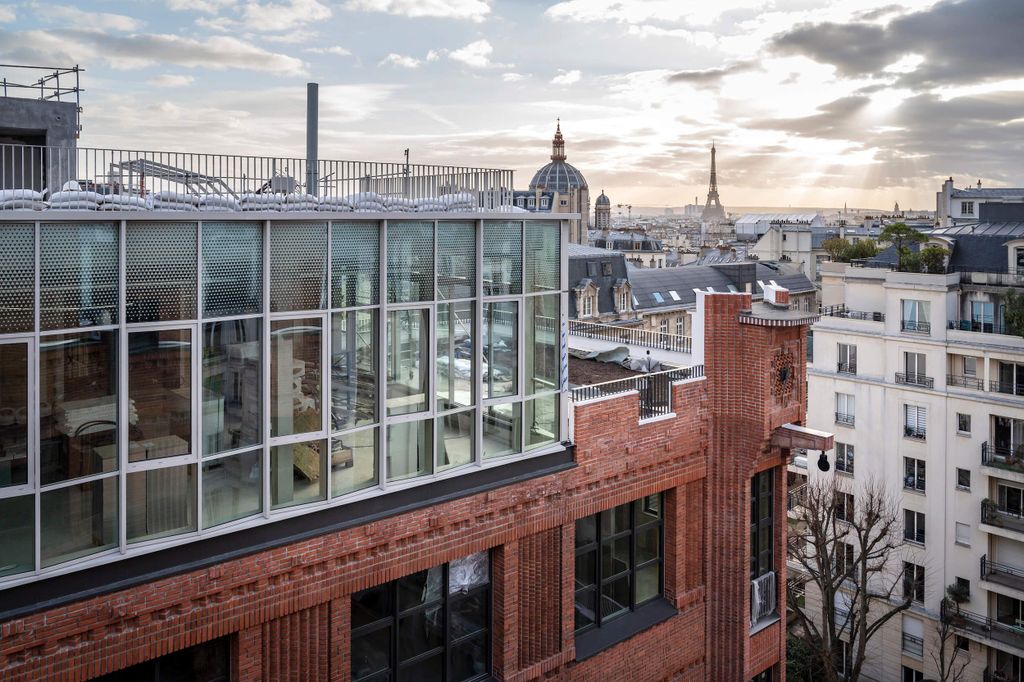
Smart buildings are also redefining the workplace. Data enables spaces to be adapted in real time: flex-office, room management, optimisation of common areas. This intelligent management of working environments improves both productivity and daily well-being.
In the residential sector, Covivio also offers smart apartments with remote control of lighting, heating and security via smartphone.
BIM (Building Information Modelling) models a building in all its physical and functional dimensions. It facilitates coordination between stakeholders and reduces construction costs and lead times.
Once the building has been delivered, BIM optimises technical management and facility management throughout its life cycle. This approach maximises energy performance and ensures the sustainability of smart buildings.
The BOS (Building Operating System) acts as a true intelligent building management system. It centralises data from the digital model, BMS, home automation, CMMS, occupant applications and IoT sensors.
Its dashboards enable real-time monitoring of occupancy, comfort, energy consumption and maintenance. They facilitate the implementation of automated scenarios, improving the quality of life for occupants and reducing the carbon footprint.
For managers, BOS is a facility management asset. By consolidating all data into a single system, it simplifies maintenance, anticipates incidents and ensures optimised equipment management. This centralisation also helps companies achieve their ESG objectives.
Connectivity, the driving force behind smart buildings, also poses cybersecurity risks. Automated systems and connected objects require robust protection.
The safety of people and property is a major concern. To address this, the strategies put in place include:
Covivio, with the support of Mazars, conducted a comprehensive cybersecurity assessment of its offices in France. This process involved mapping the real estate portfolio to identify risks, evaluate existing measures and define action plans. It resulted in a Security Assurance Plan, consolidating best practices and ensuring enhanced protection.
International certifications (WiredScore, SmartScore)
These labels measure the connectivity, user experience and sustainability of technological infrastructures.
French R2S (Ready2Services) certification
The R2S label assesses connectivity, system interoperability, data security and network architecture. It also emphasises the well-being and performance of buildings.
These certifications set high standards, ensuring that smart connected buildings are designed and operated according to best practices, for the benefit of occupants, owners and the environment.
As part of its global “smart building” approach, Covivio deploys custom digital solutions in its buildings to optimise building management and facilitate users’ daily lives.
Since 2019, Covivio has partnered with Witco, a company that has developed a digital solution serving as a one-stop shop for all services available to on-site workers. The aim is to enhance the user experience and transform workspaces into more collaborative, service-based areas.
Read the explanations below from Eliane Lugassy, founding CEO of Witco, and Laurie Goudallier, Chief Transformation & IT Officer at Covivio.
Witco is a digital solution that brings together all the services offered to employees at their workplace. It is a platform and a real companion that pools all possible requirements, ranging from incident reporting and resolution to booking a slot in the sports hall or a shared meeting room.
Eliane Lugassy
CEO & Founder of Witco

Our application is deployed across a range of workspaces including multi-tenant buildings, coworking spaces and company headquarters. Today, Witco is used by 5,000 companies based in 200 cities in Europe.
The purpose of our application can be summed up as follows: “Empower the people to do their best work.” By offering a user-friendly application that facilitates employees’ daily lives, we enable them to focus their energy on their work and express their full potential.
“By the end of 2022, the app will be deployed at 47 locations spanning 650,000 m² and accommodating 20,000 users every day.”
Laurie Goudallier
Laurie Goudallier: In 2019, when we drew up our IT/digital roadmap, we identified a need to digitise our customer experience. For this purpose, we started looking into the possibility of deploying a single solution to integrate the various service partners in our buildings whilst aiming at strong integration within our information system, including Salesforce, our CRM solution. The aim was to streamline communications with customers while offering end users an unrivalled experience. And it turns out that Witco fit the bill on all counts.
Eliane Lugassy: Covivio has been one of our most pioneering customers in the deployment of our application. Since 2020, all Wellio spots in France have been equipped.
Indeed! First, we deployed the app at our Wellio spots, as we manage all the spaces there and services form an integral part of our office solution. At the time, 4,000 end users at the first five sites were using the application on a daily basis. Two years later, we deployed it in Covivio’s multi-tenant buildings while continuing to deploy it at several locations in Italy: by the end of 2022, the app will be deployed at 47 locations spanning 650,000 m² and accommodating 20,000 users every day.
Laurie Goudallier
Chief Transformation & IT Officer at Covivio

Laurie Goudallier: It’s very simple: just download the “Covivio” or “Wellio” app on your smartphone and log in to your personal account. Witco’s strength lies in offering a customisable app: you can choose to activate certain modules and adapt the application to your user profile. For example, clients can find all the administrative documents related to space rental, while employees can access all of the shared services on offer at their workplace.
“Data feedback (anonymous!) and analysis help us optimise building management, adapt to our customers and meet their expectations.”
Laurie Goudallier
Eliane Lugassy: This is the goal! On a daily basis, users will appreciate the app’s simplicity and may even discover services they never expected to find in their building. It is worth noting that, on average, only 20% of the services on offer are actually used. The community aspect of the application will also help foster sharing and meeting, thereby restoring meaning to the office experience. Because the fact remains, the app will never replace the human element, and this is not its purpose. It is an aid that must go hand-in-hand (literally!) with the user.
Laurie Goudallier: This app turns the office into a seamless experience where you’re kept abreast of what’s going on, whether you’re at home or on site. You have continuous access to all the information.
The app also allows us to monitor incidents and the running of the building. Data feedback (anonymous!) and analysis help us optimise building management, adapt to our customers and meet their expectations. For example, it can help us rethink a space that isn’t being used, or even in the future monitor flows and physical occupation of spaces in order to optimise space rental and layout.
Laurie Goudallier : We continue to deploy the application at our service sites in France and Italy and we are looking into the possibility of incorporating it into our office and residential offering in Germany. All the brainstorming and work carried out on our assets in France will help us to fine-tune deployment in Italy and Germany. This will be made even easier given that the app is simple to customise and the process has now been tried and tested at both Witco and Covivio.
Eliane Lugassy : We are also discussing the implementation of the app in Covivio’s new Paris premises, which involves modules for managing flex-office spaces, booking workstations and tracking employee presence and occupancy levels. Working with Covivio will allow us to enhance our offer as well as generate new ideas. It is a relationship of trust and partnership that we have built up over time and that allows us to present new partners or technical solutions already successfully deployed in other buildings.
Eliane Lugassy: It is flexible and can be tailored to uses. It is also connected. Lastly, it brings people together and allows you to open up to your own colleagues and employees of other companies working in the same building.
Laurie Goudallier: It is hybrid. It embodies the company’s values. It is simple, fun and entertaining and offers uses that you cannot find at home or elsewhere. It’s no longer just the place you work, it’s a global place for living.
Just like planes and cars, buildings now come with embedded technology. Progress that is helping optimise building management systems, reduce environmental impacts and improve the user experience.
Expanding or shrinking office space depending on actual occupancy: this is the offer enjoyed by tenants of the So Pop building in Paris/Saint-Ouen. This innovation was made possible thanks to around 1,000 multi-purpose sensors fitted throughout the 32,000 m² building.
Originally designed to control heating, air conditioning, ventilation and lighting, these sensors have been upgraded to provide surface area occupancy data.
Pierre-Philippe Wibaux
Chief Technical Officer, Covivio, France.

Thanks to a dashboard, tenants can optimise the size of their premises or change the layout to better adapt to their employees’ use of space. Giving tenants the option to rent “better square metres” is just one of the many possibilities offered by smart buildings.
Using multiple technologies and data generated by sensors, smart buildings provide access to a host of information on the building.
The first benefit is the optimisation of day-to-day operations, whether by managing fluid and air circulation and lighting control or adapting the service offering to the number of occupants.
Philippe Boyer
Head of Innovation, Covivio
By providing greater visibility on the state of a building and the operation of its equipment, technology also helps improve maintenance. This then leads to both environmental and financial benefits.
Users, too, can derive many benefits from occupying a smart building. Aside from day-to-day comfort, in terms of lighting, heating and ambient air quality, they also enjoy optimised connectivity and services designed to simplify everyday life. “We offer an app that works as an access badge and a point of access to services. It also lets users declare their days present on site, receive notification of a visitor’s arrival or book a meeting room”, Pierre-Philippe Wibaux adds by way of example.
Thanks to its dedicated smart building team, Covivio is developing buildings around a “smart spine”. Its aim? To offer occupants optimal connectivity and a range of tailor-made services providing a seamless transition between common areas and private spaces. Designed to demanding specifications, Covivio’s model of a connected building is characterised by its adaptability and scalability. A pre-emptive response to future technological change.
With office buildings becoming ever more connected with increasingly smart technology, cybersecurity has become a key issue for companies. With this in mind, Covivio carried out a mapping exercise to assess its portfolio’s “cybersecurity” maturity level, which it then used to define an audit approach and a Security Assurance Plan.
Pierre-Philippe Wibaux: Office buildings have become “smart”, meaning that they are sophisticated and hyperconnected thanks to increasingly open building management systems, the introduction of BOS (Building Operating System), the IoT, etc. Alongside this, nowadays we see mostly multi-let buildings, with occupants now using digital tools for their operations, particularly from the service areas available in both the common and tenant areas. This is why building cybersecurity, which can be defined as a set of systems and measures aimed at ensuring digital security, has become an issue for office buildings and the companies that occupy them.
Like our tenants, we are aware of the risks associated with the swift and sweeping changes that are affecting digital usage. We have therefore decided to implement systems aimed at making our buildings secure.
Marielle Seegmuller
Operations Director, Covivio
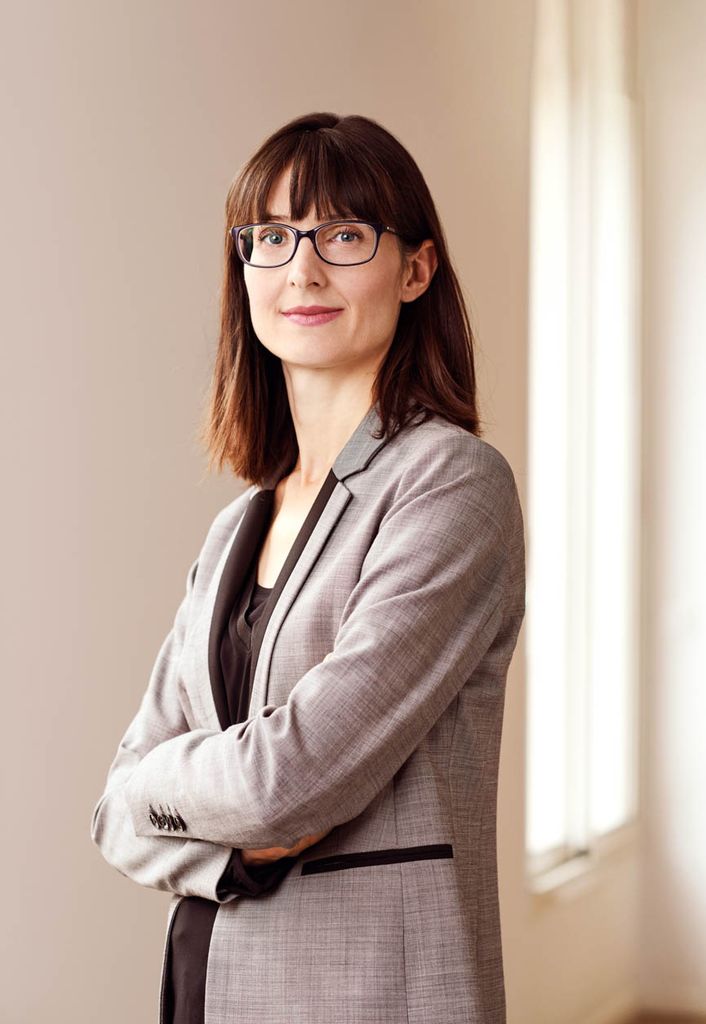
Marielle Seegmuller: We have established a Security Assurance Plan, which came about as follows. In mid-2022, we began a global brainstorming process with Mazars regarding office cybersecurity to assess existing measures in place in our French office buildings. This process involved mapping our portfolio and identifying potential risks, along with the cybersecurity measures in place, which we then used to draw up recommendations and action plans. More generally, we drew up a Security Assurance Plan setting out our cybersecurity commitments and best practices.
Pierre-Philippe Wibaux: This task took eight months and involved most of the Covivio teams – Legal, Smart Building, Real Estate Engineering, Customer Relationships and Internal Audit – alongside certain service providers, reflecting the true complexity of the matter.
The mapping exercise provided a lot of insight along with a clear overview of the state of the building’s cybersecurity, allowing us to make the necessary operating adjustments and specify which elements fall on the lessor, the tenants and the various service providers.
Pierre-Philippe Wibaux: It is a document describing the principles that Covivio strives to implement to respond to cybersecurity issues. It sets out the organisational structure in place, the methodology used for building security management and the technical, organisational and procedural measures implemented to protect assets.
Marielle Seegmuller: The Security Assurance Plan allowed us to define what we require from our service providers in order to ensure cybersecurity in our office buildings. These specifications will henceforth be included in our calls for tender and will enable us to ensure commitment and compliance on the part of our service providers.
We created this custom checklist alongside Mazars, based on the ISO 27 001 and R2S standards. It comprises 37 checkpoints concerning areas such as logical and physical security, compliance and building network use.
Pierre-Philippe Wibaux
CTO, Covivio
Pierre-Philippe Wibaux: Cybersecurity transforms the jobs of our Development and Smart Building teams, since the topic is incorporated into the thinking process right from the design phase in order to optimise efficiency. We are confident that cybersecurity will become a determining factor for selecting a building.
Marielle Seegmuller: Our role as building manager and operator is also changing as new skills are required. For example, a Facility Manager can now draw on an IT service manager’s expertise to keep the building in working order and supervise IP networks. It also affects our service providers, since cybersecurity requirements are now included in our selection criteria.