
Covivio Newsletter
Understanding tomorrow's city
- Find out all the Covivio news every month
- Discover our latest projects: offices, residential, hotels
- Decipher the city and its challenges with our Expert Views
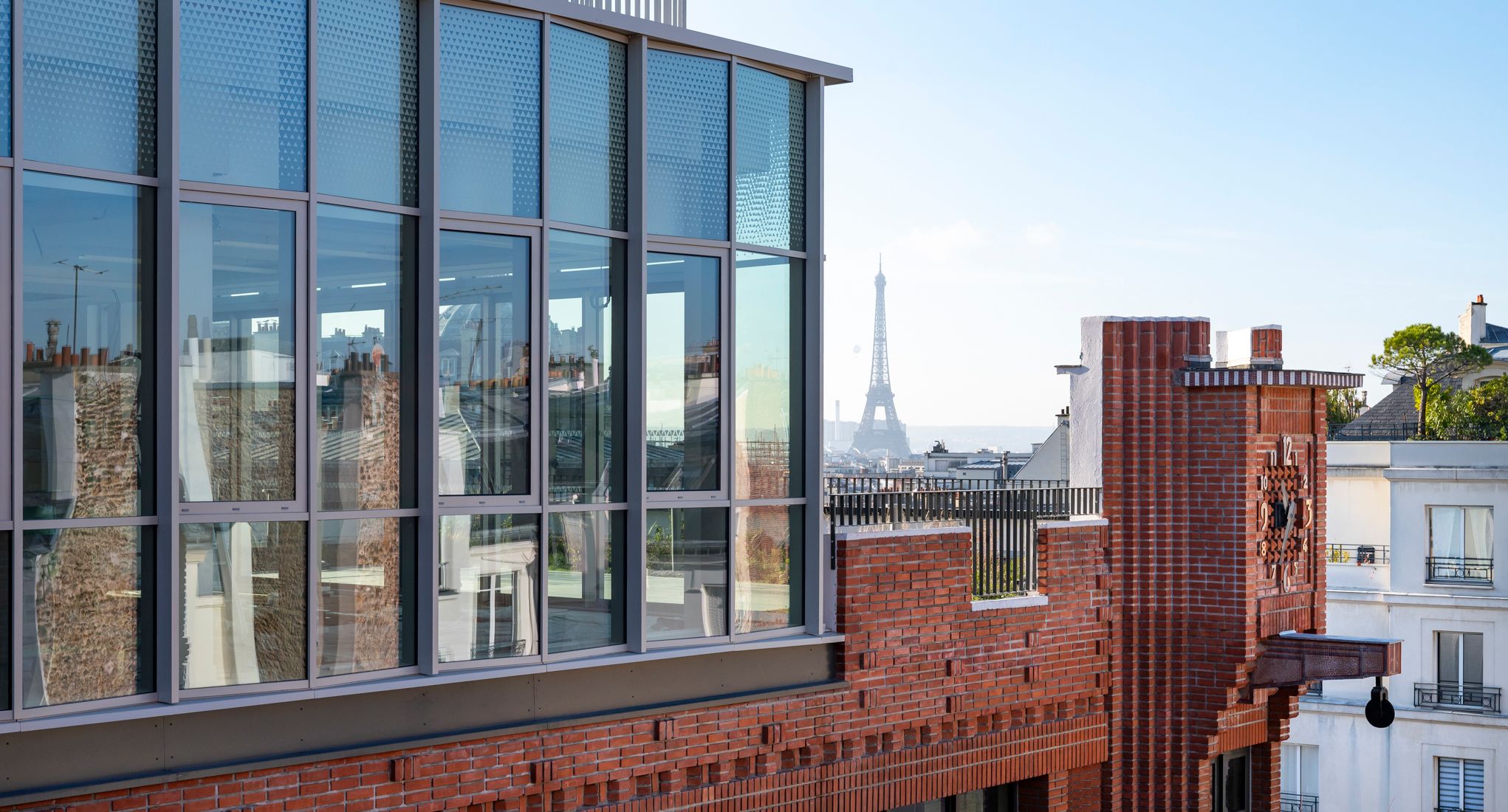

Is it really necessary to destroy buildings to live better lives? At a time when our lifestyles are changing faster than ever, there is another way: adapting and converting what we already have. In combining building heritage protection with adaptation to new expectations, Covivio has taken the renovation route to creating more sustainable lifestyles.
Our homes reflect our lifestyles. This fact is more true now than at any other time, as housing has no choice but to adapt to rapid changes in family structures, work patterns and environmental issues. These structural changes raise questions not only around the way buildings are designed, but also our ability to adapt existing buildings to meet these new demands. Architect Antonin Yuji Maeno believes that “far too many homes across Europe are being destroyed right now. Reusing existing buildings is a very important thing. That’s even more true today, when there’s a real appetite for non-standard spaces”.
Combining historic charm with modern architecture is the answer offered by architect Theo Wunderlich in his design for the eco-community on the island of Eiswerder, a Covivio-owned former industrial site in Berlin-Spandau. But doing so demands greater experience and tighter coordination. “The clinker brick facades of the new buildings have been chosen to match the listed industrial buildings as closely as possible, but in conjunction with large areas of glazing. The buildings tell a story. And those who live here feel it too. A lot of people prefer living somewhere with a rich heritage”, he explains.
This need to reconcile old and new is reflected in many Covivio projects. In Bordeaux, the Noème development is converting a lakeside office site long abandoned in favour of more industrial activities into a new residential community. The same desire to conserve and protect the spirit of place is also clear in the Les Terrasses du Mont project in Rueil-Malmaison and Suresnes, just outside Paris. This project involves converting a former head office building into a residential complex, while conserving the historic building and reusing the existing ashlar stone for the new buildings.
As Caterina Locati, founder of Habitat Evolutivo®, points out: “Over time, every building gradually lays down the strata of its own history, both visibly and invisibly”. Her analysis draws on both quantum physics and epigenetics to explore the idea that our environments influence the expression of our genes, and therefore, in this case, of buildings, to reveal the energy of life spaces. Her beliefs and practices have been applied in the Covivio Ca’ del Chiostro project to convert an historic building in the city of Padua that has in its time been a monastery, a Napoleonic barracks and the headquarters of the financial administration into new residential units. She believes that “the home of tomorrow must deliver everything it does today: aesthetics, functionality, quality and durability. But it needs to add something to that list that has more to do with our inner selves, our wellbeing and our balance”.
The Global Wellness Institute estimates that the wellness property market was worth $548 billion in 2024. So it would seem important to be able to determine at an early stage whether an old building has the potential to convey ‘soul’, a particular genius loci, before embarking on its conversion…
“The buildings tell a story. And those who live here feel it too. A lot of people prefer living somewhere with a rich heritage.”
Theo Wunderlich
Architect and managing partner at Wunderlich Architekten
How can we adapt former industrial sites to serve the lifestyles of today and tomorrow? What can these vast spaces designed for yesterday's world offer today's communities? We focus on two Covivio regeneration projects that embrace changing urban mobility solutions and the need to bring nature into our cities.
Occupying a former IBM site in Bordeaux, France, the Noème project is now a residential community that recognises the power and virtues of nature. In Italy, Covivio has completed The Sign, an office complex that integrates seamlessly into its environment, now one of Milan’s prestige business centres. Both projects successfully repurpose heritage sites with rich histories by combining past, present and future for the benefit of those who live in these new communities.
Before The Sign, all 40,000 m² of the former Vedani foundry were inaccessible to the public. The industrial infrastructures presented an insurmountable and forbidding blockage, while The Sign is the complete opposite: an open space with traffic and communication links re-established beneath one of the buildings.
“The central idea is”, explains Umberto Gatti, Portfolio Manager at Covivio Italy, “for this space to be used during the day by people who come here to eat in its extensive choice of restaurants, rather than just those who work here”. In Bordeaux, Noème is responding to precisely the same need for open access. Creating this 35,000 m² project, which will eventually offer 700 homes with its own through routes and internal roads required the designers to think carefully from the outset about the life of an entire community.
“What we’ve created is a new gateway to the city”, explains Covivio Project Manager Sophie Combastet.
As Sophie Combastet explains, the ultimate aim of Noème has always been to combine all the services residents would expect to find in a residential complex with a more unexpected range of facilities to “create the feel of a community and provide all the facilities that such a community would need for sport, home deliveries and sociability”. So the facilities now available to residents include a community meeting space, a greenhouse, a volleyball court and a shared urban gîte. Creating the conditions for community life is also a key character trait of The Sign, where the ground floor is designed for sociability: “By extending the existing spaces, including the IULM university garden to include a square, we’ve put in place the conditions for creating a community that brings the area to life, regardless of whether or not the members of that community work here”, says Umberto Gatti.
The Sign is not only fully integrated into its immediate environment, but also very well connected to the rest of the city by the nearby metro system.
“The central idea is for this space to be used during the day by people who come here to eat in its extensive choice of restaurants, rather than just those who work here.”
Umberto Gatti
Portfolio Manager at Covivio Italy
Both projects embody a shared desire to integrate nature into the built environment, rather than settling for purely decorative gestures. Sophie Combastet again: “With Noème, you get a very real feeling that nature is reclaiming its place in the city. You have to make your own way through the paths: the landscape designer is totally delighted!”. To leave breathing space between residences and avoid excessive massing, the new Bordeaux community has been divided into six blocks (Block 2 received the SIMI ‘Housing & Accommodation’ Award in 2025).
Consistent with the spirit of the project, the square at The Sign in Milan is open to the public all day as an extension to the city. With The Sign, “We were determined to go further than simply designing a project with the energy performance credentials needed for green certifications”, continues Umberto Gatti. “We want occupants to feel comfortable here, and we’ve achieved that by successfully integrating the project into the existing urban fabric”.
Instead of opting for stereotyped and circumscribed green spaces, the Milan and Bordeaux projects treat nature as a key contributor to the process of metamorphosis, and integrate it organically into the environment.
Developing a project, whether on a brownfield site or a plot of virgin land waiting for the right scheme, demands that we think very carefully about what tomorrow’s cities will look like. “Whatever happens, office space will always be in demand”, says Umberto Gatti. “All four blocks of The Sign are fully let, because the buildings are designed to be modular, clients who commit for more than ten years have the opportunity to refit the floors they occupy. Every opportunity has been taken to ensure that these buildings can continue to evolve as they mature”. Sophie Combastet also sees anticipating future uncertainties as “avoiding the spaces we build becoming frozen in time”.
Those who live in these homes must have the freedom to make them their own. Although, as she says “it’s more challenging to give a completely new building a soul from the outset”, the challenge of creating a sociable atmosphere has been met at Noème, since residents already refer to the central square as ‘the village square’.
Both perfectly integrated into the existing urban fabric, these ambitious projects have created spaces that are appropriate to today’s world, but look forward with confidence to the future.
“With Noème, you get a very real feeling that nature is reclaiming its place in the city.”
Sophie Combastet
Covivio Project Manager
For its Paris edition, PRINT, a temporary and hybrid cultural project that originated in Arles during the “Rencontres de la Photographie”, will take over Covivio's historic "Ménilmontant" building, located in the 20tharrondissement of Paris, for three months. Former telephone exchange to be renovated, this bright building with spectacular volumes is being transformed into a temporary and unique cultural destination, open to all.
PRINT moves to Paris
For three months, PRINT will transform this 3,000 m2 space on six floors into an immersive experimental space combining music, photography, and gastronomy.
The project will offer a program combining DJ sets, concerts, original artistic performances, album releases, and guided listening sessions. Visitors will also be able to enjoy culinary offerings created by chef Alexis Bijaoui.
Throughout the three months, new temporary art installations, one-off events, and unexpected formats will punctuate the program. A hidden bar will be set up on the sixth floor, with other surprises to be discovered over the weeks.
A new temporary experience hosted by Covivio
Creating a destination before the place even exists: this is Covivio’s ambition with its Éphémère offering, which enhances its spaces undergoing transformation by giving them a new temporary lease of life and offering unique experiences. It is in this spirit that “Ménilmontant by Covivio” will come alive with the PRINT event before its renovation.
“For several years now, Covivio has been reinventing its buildings to turn them into vibrant destinations. Over the next three months, the building will buzz with the energy of creators, retailers, and local players, and this collective emulation will inspire us as we write the next chapter in its story”
Céline Leonardi, Director of Marketing & Customer Experience
Europe at Covivio.
Private screenings, exclusive dinners, fashion shows, product launches... raw, modular spaces open to creativity, capable of hosting specific scenographies before their transformation
Creating the destination before the venue even exists: this is Covivio’s ambition, promoting its spaces undergoing transformation by offering them a new, temporary lease of life that foreshadows the site’s future identity. It is a way of asserting its positioning as a living real estate company and revealing the potential of these destinations in the making.
For several years, Covivio has been working hard to reinvent places while remaining faithful to their history and identity. More than just spaces, the group shapes experiences and moments of life in buildings that have a unique past and soul.
A symbol of this approach, the “Grands Boulevards” building (Paris 9th arrondissement) perfectly illustrates the group’s new vision. Formerly a telephone exchange where the telephone operators worked, then a post office that housed the postman’s apartment, the place has been given a new lease of life by hosting several exclusive events, extending its architectural and human heritage. Another example is the “Beige” building in the heart of the 17th arrondissement, which has already hosted several exclusive dinners, including one orchestrated by the chef of Le Meurice, who left the splendour of the palace behind to enhance this raw building for an evening.
Through the various events hosted within its heritage portfolio, Covivio has become convinced that a place, through its identity and its ability to adapt to new uses, guides transformation and spaces, whether they are designed for working, travelling or living, are now conceived differently.
Covivio thus affirms its expertise: creating places with a strong identity, versatile and embodied, capable of becoming destinations even before their transformation is complete. The group’s approach is not just a response to trends, it is now a philosophy: transforming while preserving the heritage of the past and enhancing without freezing.
Long seen as just a place of production, the office is now undergoing a real transformation. In just a few years, the lines have shifted: the widespread adoption of remote working, the rise of flex office and the quest for agility have revolutionised tertiary real estate. It is no longer a building that we occupy, but an experience that we choose to live.
Marielle Seegmuller: At Covivio, the transformation of the office has been a reality for several years. The group did not wait for the Covid crisis to rethink real estate! The goal today is to design the office as an attractive destination, capable of offering service and satisfaction to employees seeking meaning and new experiences. Beyond the “wow” effect, our role as a 360° real estate operator is to maintain this attractiveness by offering agile, flexible, service-oriented spaces that are consistent with the needs and new expectations of employees.
Marielle Seegmuller: Square footage is no longer enough. Today’s businesses are not just looking for well-located offices, but places that offer a complete, fluid and inspiring work experience. The office is becoming service-oriented. It incorporates the codes of the hotel and retail industries, with a growing demand for personalisation, comfort and ease of use.
The aim is to offer employees something “more” and “different” than home office: a diverse and inspiring environment that allows them to work comfortably, efficiently and collaboratively. This evolution marks a shift from a property-based model to a subscription model with or without options.
In fact, owners no longer rent space, they subscribe to a comprehensive service: workstations, integrated services, shared spaces, digital equipment, events… everything is designed to maximise employee satisfaction and optimise the use of the space.
Welcome to the era of the operated office!
Marielle Seegmuller: We do indeed have several renovation projects in our European portfolio: in Paris, in particular, where we have two iconic developments underway, “Grands Boulevards” in the 9th arrondissement and “Beige Monceau” in the heart of the 17th arrondissement. These are two buildings with great potential that we are redeveloping in line with the new Covivio office design codes.
I am also thinking of our CB21 tower in Paris La Défense, which will undergo a major renovation programme. In Germany, we will soon be delivering the “LOFT” project in Berlin – a former industrial building from the early 20th century that has been completely redesigned – and in Italy, we are finalising the “Corte Italia” project, which is also the redevelopment of a historic building in the heart of Milan’s city centre.
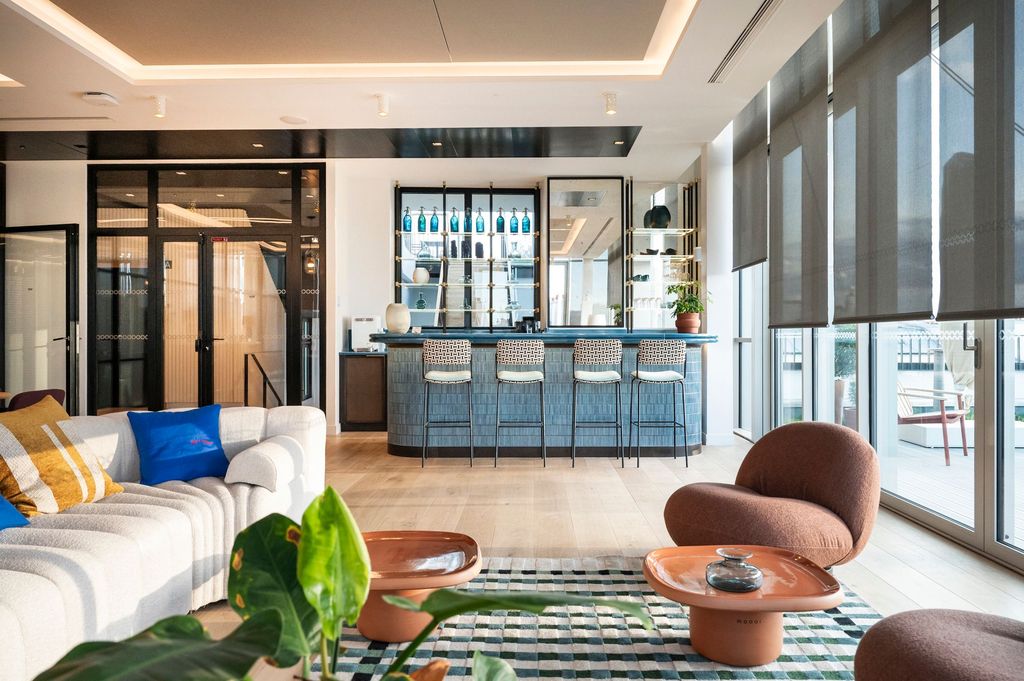
L’Atelier embodies a new way of making the office a creative space, at the crossroads of different uses and imaginations. Covivio’s new European headquarters, this building is a place where people create, concentrate, test and produce. It is a place of learning and know-how, a true showcase for Covivio’s expertise and cultural values. It also reflects the group’s policy of rebuilding the city within the city.
This building offers a working environment with a full range of services, large green terraces and a cultural programme.
Developed around the concept of reconnecting with nature, Urban Garden gives pride of place to greenery and outdoor spaces.
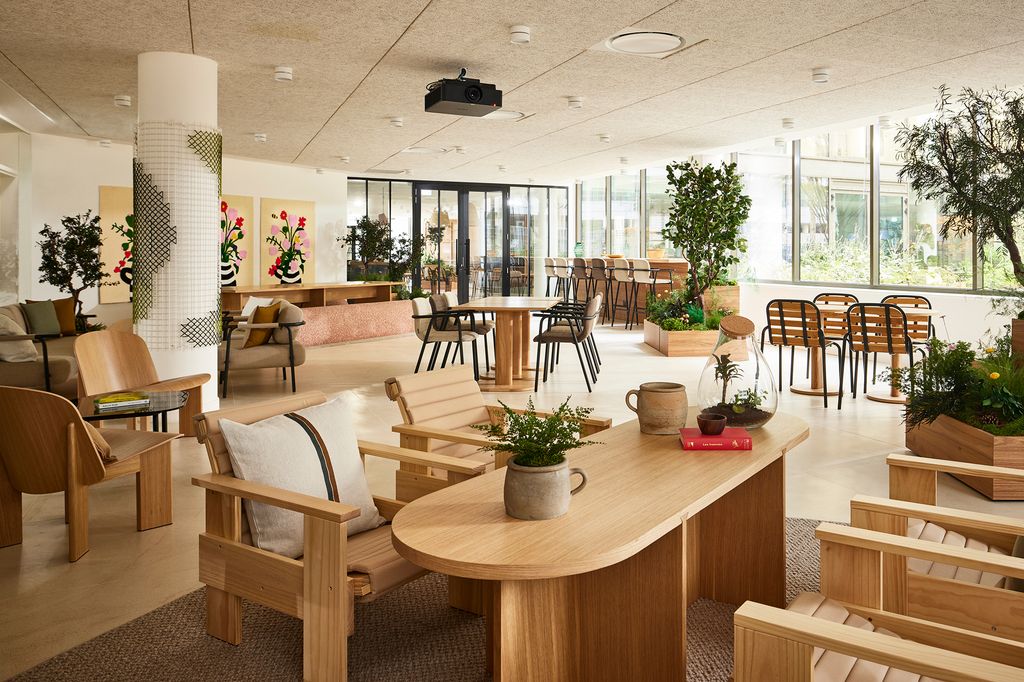
Long seen simply as a place of production, the office is now undergoing a veritable metamorphosis. In the space of just a few years, things have changed: the spread of teleworking, the rise of the flex office and the quest for agility have profoundly transformed real estate. It's no longer a building you occupy, it's an experience you choose to have.
Faced with the hybridisation of working methods, companies are now looking for more flexible and responsive real estate solutions that are adapted to the diversity of their uses. The traditional 3-6-9 commercial lease model is showing its limitations : lack of flexibility, cumbersome management, and a lack of integrated services. It is in this context that operated offices are emerging, halfway between traditional offices and coworking spaces.
But what exactly does the concept of an operated office mean? It is an office space that is fully managed by the landlord, including fit-out, maintenance, daily services and contractual flexibility. Everything is included in the lease agreement. The client company can focus on its core business, free from administrative and management constraints. It benefits from a turnkey office that is ready to use with no set-up time.
There are many advantages to an operated office: shared space, cost control, time savings, enhanced attractiveness and an improved employee experience. In a world where the workplace is becoming a choice, the operated office offers a hybrid solution that makes people want to come, interact and create.
Square footage is no longer enough. Companies are no longer just looking for well-located office space, but a complete, inspiring and fluid working environment. Operated offices are part of this transformation of operated real estate, incorporating the codes of the hotel and retail industries: personalisation, comfort and ease of use.
We are moving from a property ownership model to a subscription model, with or without options. It is no longer about renting space, but about signing up for a service contract that includes workstations, meeting rooms, shared spaces, digital services and events. A whole range of services designed to optimise performance and well-being.
Real estate departments gain time and clarity: less operational management, more strategy. Indicators are also changing: satisfaction and productiviti , and intensity of use are replacing the traditional square metres or lease term. Better than home? That’s the goal: to offer a stimulating work environment, a place for socialising, learning and innovation. And that’s exactly what the operated office model delivers, whether it’s a shared solution or a private workspace.
At Covivio, this evolution has been underway for several years. The group has successfully anticipated changes in the real estate sector by placing the user experience at the heart of its approach. Its strength lies in transposing the codes of hospitality into the office world, with assets designed as places to live, far beyond their primary function.
Whether it’s flexible offices, operated spaces or traditional leasehold projects projects, the culture of service is omnipresent: welcome, personalisation, quality of the environment. A consistent approach, aligned with the needs of start-ups, SMEs and large groups.
In Berlin, LOFT is rolling out modular workspaces bathed in natural light and designed with ergonomics and aesthetics in mind. In Düsseldorf, ICON combines design, environmental certifications and premium services in the heart of a changing business district.
In France, Urban Garden in Issy-les-Moulineaux offers a comprehensive serviced real estate solution with green terraces and cultural programming. In Saint-Ouen, So Pop offers an agile and innovative environment. And in Paris, L’Atelier explores new uses, combining creativity and functionality.
Created in 2017, Wellio embodies Covivio’s office offering. Present in several European cities, it offers flexible, all-inclusive “plug & work” spaces designed for business performance and user well-being.
Everything is included in the lease: design, shared services, technical management and support. This comprehensive approach shifts the focus from square metres to cost per user, covering all expenses. This model of serviced office rental is attracting more and more companies seeking simplicity and efficiency.
The serviced office is no longer thought of in isolation. It is part of an urban ecosystem, linked to mobility, local services and mixed uses. Its flexible, intensely service-oriented format reinforces the fluidity between professional and personal life.
The challenge ahead is to guarantee a consistent service experience without falling into uniformity. Operated offices must reconcile standardisation of services with personalisation in order to meet the expectations of new generations and the flexibility requirements of businesses.
With its managed offices, Covivio is sketching out a new way of working: more human, more fluid, more sustainable. It is a long-term real estate solution designed to engage employees, stimulate their creativity and strengthen their sense of belonging.
Despite its apparent busyness, the city has so many empty spaces that are filled only intermittently. So intensifying the use made of existing buildings rather than building new ones would therefore seem to be a useful response to urban sprawl. Marie-Laure Leclercq de Sousa, Chief Executive Officer France, Belgium, Luxembourg and Southern Europe at JLL, explains the core principles around the intensification of workspace use (and its limits).
By emptying offices of their occupants, the Covid period has had a major impact on workspace design. “There’s now a widespread awareness of the need to use space sparingly. In the same way as our natural resources, floor space has become a resource whose use needs to be considered”, says Marie-Laure Leclercq de Sousa.
Creating single-use offices occupied by just one person now seems aberrant, despite the fact that, as she points out, the actual occupancy rate of offices is now estimated at between 30% and 40% across Europe, evenings and week-ends included.
In the same way as our natural resources, floor space has become a resource whose use needs to be considered.
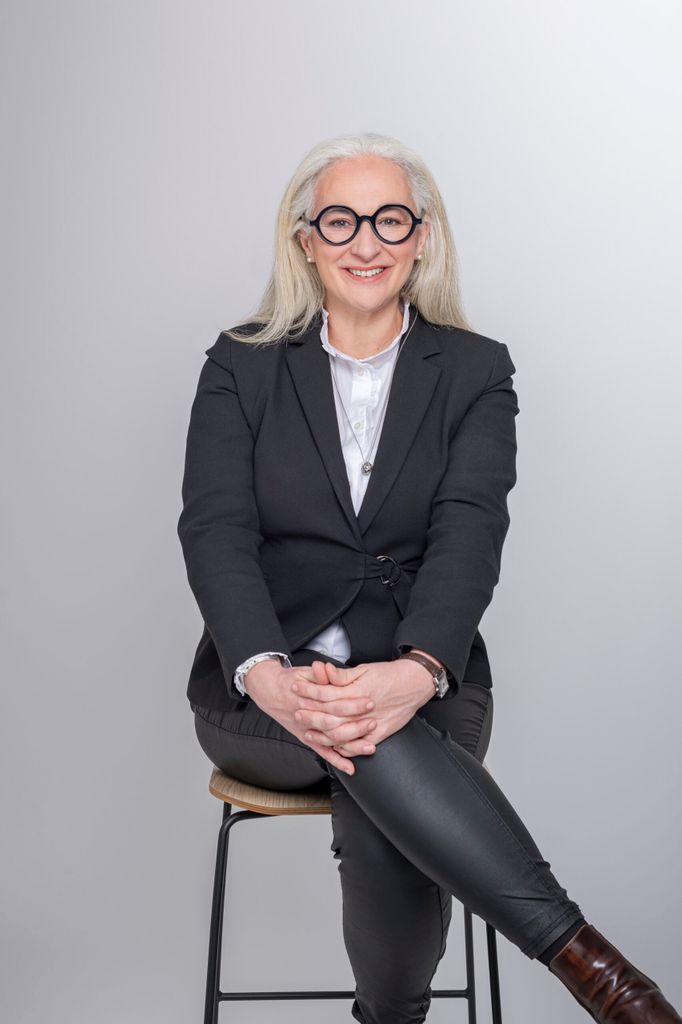
Marie-Laure Leclercq de Sousa
Chief Executive Officer France, Belgium, Luxembourg and Southern Europe at JLL
Against this background, building use intensification is changing the way we think about these spaces, based on four core principles.
Firstly, usage hybridisation in which some business spaces are made available for other uses during periods when they are not required to fulfil their primary function. For example, using company restaurants as training or meeting spaces outside mealtimes.
Then comes pooling, where the aim is to share a common space between different users. This is the flagship model for coworking and flex office working.
The third solution is a combination of the previous two based on the principle of chronotopy, a concept that combines the temporal (chrono) and spatial (topos) aspects all space usage. In this way, offices can potentially become accommodation at weekends, while meeting rooms or lecture theatres can be used as public meeting venues when employees are not using them.
The fourth and final core principle is reversibility, which involves considering the possible future uses of a site at the design stage to avoid locking it into a single use, so that former offices can be converted to housing or hotels, for example.
However, there are a number of obstacles to the widespread application of these intensification principles. Combined with the diversity of public and private stakeholders involved, the sheer variety of shared spaces creates the need for bespoke solutions that are difficult to reproduce at scale. The way in which cities have historically been designed, and the cultural relationships that each country has with workspaces, are distinctive differences that are hard to overcome. “The people who make up the rich diversity of everyday working life don’t operate in the same way everywhere”, says Marie-Laure Leclercq de Sousa.
Jérémy Nadau is a different kind of architect. The man who was originally destined for a career as a professional footballer opened his own practice in 2008 with just one aim: to use architecture to bring people together. That principle has since been applied at the Noème residential neighbourhood developed by Covivio on the banks of the Lac de Bordeaux in a location previously occupied by IBM, where the architect has designed two very colourful buildings.
Jérémy Nadeau: I’m part of the generation that has seen the emergence of third spaces almost everywhere in France. We like the idea of creating spaces that can be repurposed and evolve in response to events. This type of project has taught me how to analyse buildings in terms of how they are used. And it’s that central concept of use that emerged foremost in the buildings designed for the new Covivio project in Bordeaux: Noème. Our brief was to create a new identity for a former office complex that had become rather dehumanised.
Building homes is undoubtedly the most difficult task of all. You have to understand how to create high-quality spaces with generous exteriors, and defend your ideas as every stage of the project despite the sometimes contradictory pressures imposed by different stakeholders. Above all, it’s about enabling residents to adopt the space and make it their own.
Jérémy Nadeau: The essential connecting factor is the concept of shared space. If we get that wrong, even where the finished building is intrinsically high quality, we fail to deliver a major concept: the concept of threshold. How you enter your home and how you share the space. For the two buildings I worked on, we began by designing large double-height entrance halls integral to the public space where people would meet each other. We created these large volumes on the premise that they could be developed and dense, by working around the concept of ‘capable volume’. It’s up to future owners to evolve them.
It seems to me that the architect has a duty to bring forward a humanist concept, but that the real skill lies in understanding how to anticipate the potential transgression of these spaces. Such transgression is possible only when those spaces are well conceived and designed. And the same commitment to appropriation has guided us in the creation of a cultural space located opposite our practice. The fact that it was quickly christened ‘Gotham’ was itself proof of adoption by the young people from priority neighbourhoods who we train in architecture, photography, 3D modelling and public art.
Jérémy Nadeau: Full implementation of the new thermal regulations between now and 2030 will be crucial determining factors in everything we do. They require us to take a global view of energy, buildings and the life cycle of materials. I’ve never before felt this strongly about the power of what we do to change things. The rising generations are pushing us hard from behind. Vernacular architecture is making a strong comeback in colleges and universities. They want to understand how to work with biobased and geobased materials and how they can be combined. The engineers we work with also have very different skills.
The key issue now is how we’re going to transform the way we build. Rather than taking a purely capacity-focused approach to housing, we now need to look at it in terms of bioclimatic factors. The same also applies to existing buildings. It’s a specific way of working that will soon become the norm.
Jérémy Nadeau: I see building on our heritage as the key to everything. In today’s world, we need to approach things by taking account of what we already have. High ceilings, stone, joinery and shutters are all premium features. Starting with an existing stone structure with walls 60 cm thick is in itself a significant starting point. This initial diagnosis of the existing built heritage represents around 30% of any refurbishment project. But people are going to need training in order to do this. I hope that in the future, we’ll build bigger and less finished, by which I mean leaving volumes unfinished so that people can use the spaces to build their own lives.
.

FranceBordeaux
In the face of environmental challenges and the fight against urban sprawl, urban recycling is emerging as a key solution. The transformation of brownfield sites and abandoned spaces opens up unique opportunities to reinvent the city, combining sustainable development, economic attractiveness and quality of life.
Covivio is part of this dynamic, rehabilitating forgotten areas to turn them into mixed-use, attractive neighbourhoods. In Milan, the redevelopment of Scalo di Porta Romana illustrates this vision: a large-scale project that will host the Milan-Cortina 2026 Olympic Village and reconnect two historically separate neighbourhoods, while integrating housing, offices, shops, green spaces and modern infrastructure.
But beyond rehabilitation, how can urban regeneration be achieved in an intelligent and sustainable way? Let’s take a closer look.
Urban recycling, also known as urban renewal or urban redevelopment, involves transforming already artificial spaces – industrial wastelands, former logistics areas, vacant lots – to give them a new lease of life.
It is not just about urban renovation: urban recycling aims to create dynamic, attractive and sustainable neighbourhoods, taking into account the social, environmental and economic needs of cities.
Urban recycling is part of the Net Zero Land Take objective set by the Climate and Resilience Law. It helps to limit land consumption, preserve natural resources and reintroduce biodiversity into urban areas.
Beyond the ecological aspect, it is a tool for urban policy: it revitalises priority neighbourhoods, promotes social and intergenerational diversity and improves quality of life through new public spaces.
By reinvesting in already built-up land, urban recycling makes it possible to:
Urban regeneration stimulates the real estate market, attracts businesses and shops, and restores value to neglected areas.
By integrating housing, offices and services within the same neighbourhood, these projects promote inclusion, proximity and a better quality of life for residents.
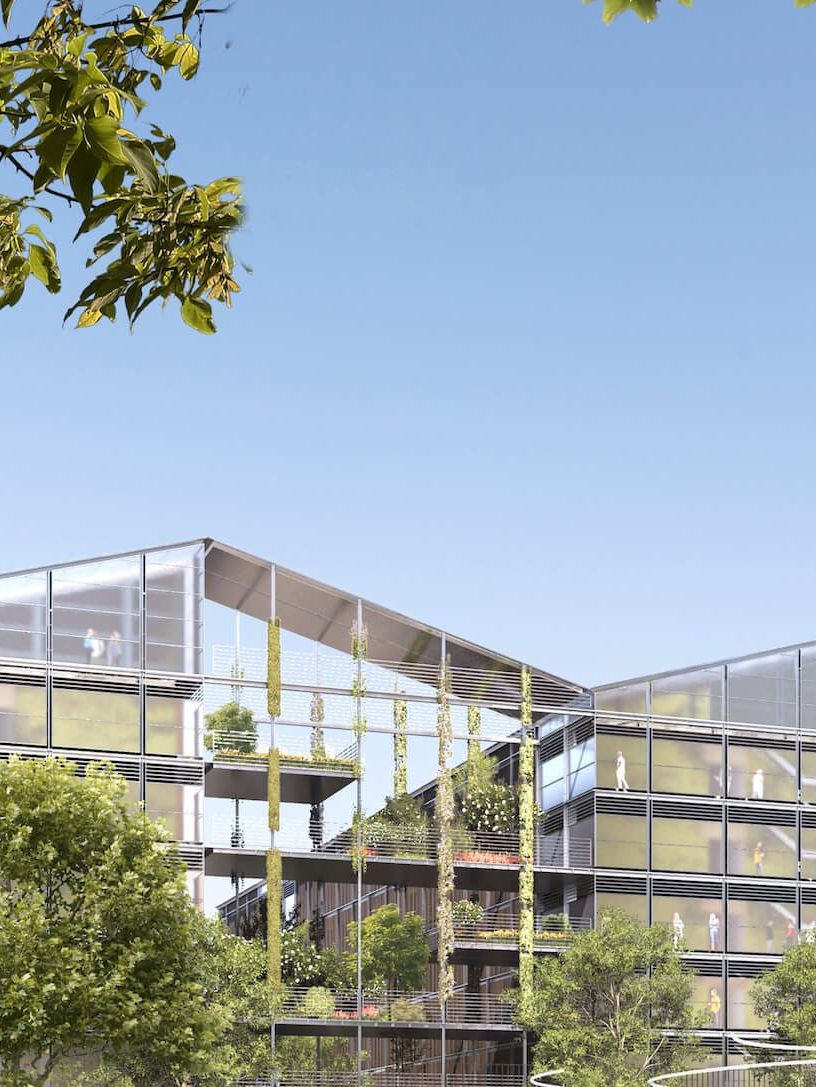
A former 190,000 m² railway yard, Scalo di Porta Romana is the subject of a major urban regeneration project led by Covivio, Coima and Prada. The aim is to reconnect the southern part of Milan with the city centre by creating a mixed-use, sustainable and open neighbourhood.
Also in Milan, Symbiosis and The Sign are two completed urban regeneration projects that combine energy efficiency and architectural innovation, breathing new life into vibrant and attractive neighbourhoods.
ItalyMilan
Covivio’s projects incorporate:
By combining housing, offices and shops, Covivio designs neighbourhoods that are constantly alive, reducing travel and boosting local activity.
Each project puts people at the centre, with:
On the former IBM site, Covivio is developing Noème, a sustainable urban redevelopment project combining housing, services and green spaces. This project illustrates how to transform an existing site into an attractive and modern hub.
FranceBordeaux
Through iconic projects such as Scalo di Porta Romana, Symbiosis, The Sign in Milan, and Noème in Bordeaux, Covivio demonstrates that urban recycling is much more than a land constraint: it is a strategic tool for building the city of tomorrow.
By combining expertise, partnerships and environmental commitment, Covivio has established itself as a major player in urban recycling in France and Europe, contributing to more inclusive, resilient and sustainable territories.
Faced with the growing challenges of urbanisation, sustainable development and changing lifestyles, mixed use is emerging as an essential and strategic response for real estate players. But what exactly does this concept mean? And how can it transform our urban spaces? Through its iconic and innovative projects, Covivio demonstrates that mixed use is much more than just a sustainable urban development choice: it is a powerful lever for creating resilient, inclusive places that are adapted to the evolving needs of local areas and their inhabitants.
Mixed use refers to the coexistence of various functions within the same space: housing, work, shops, leisure and services. Unlike traditional zoning approaches, where each space is dedicated to a single use (residential, tertiary or commercial), functional diversity brings these functions together to create vibrant and efficient urban ecosystems.
Functional diversity in urban planning is defined as the plurality of functions (economic, cultural, social, transport) within a single space (neighbourhood, housing estate or building). Offering an alternative to the traditional model, this principle promises benefits in terms of sustainable development: it promotes cities with short distances, reduces spatial inequalities in access to services and improves the well-being of residents.
Ministry of Ecological Transition
The model helps to avoid dormitory towns and business districts that are empty after 6 p.m. By reintroducing diversity into urban spaces, including city centres, mixed-use development in cities stimulates social interaction, shortens daily commutes and enhances existing infrastructure. It is in line with major trends in mixed-use urban planning, such as soft densification and eco-neighbourhoods, and is based on active mobility and intermodality.
Popularised by Carlos Moreno, the concept of the 15-minute city aims to enable every resident to access essential services — work, housing, entertainment, healthcare — within a 15-minute walk or bike ride.
Covivio is embodying this vision in several projects, including Scalo di Porta Romana, Milan’s future Olympic village. Led by Coima SGR, Covivio and Prada Holding S.p.A., this project is one of Milan’s biggest urban planning challenges for 2025-2030.
After the 2026 Winter Games, Scalo di Porta Romana will be transformed into a multifunctional neighbourhood comprising student residences, green spaces, shops and community facilities.
The goal: “To create an Olympic village that will become a lasting legacy of Milan’s heritage,” says Anna Di Gironimo, co-director of development for Covivio in Italy, in Reinventing Our Real Estate Stories (Urban Designers magazine).
Functional diversity in architecture is not limited to the urban scale: it also applies to buildings. These spaces are becoming multifunctional hubs capable of meeting users’ needs by integrating a variety of services and active ground floors.
Example: Stream Building in Paris, winner of the Reinventing Paris competition. The building combines offices, a hotel and shops on the ground floor. It also houses a third place, the Stream Café, designed as a space for welcoming, meeting and relaxing, but also for reflection, with a large library on Stream research topics. A solidarity-based coworking space (Cinaspic), operated in collaboration with the City’s Attractiveness and Employment Department, provides a home for neighbourhood associations.
The mixed use of buildings also opens up new possibilities in traditionally single-purpose assets, such as hotels and residences. Covivio is transforming these spaces to incorporate new uses and maximise their value.
Integrating mixed use into real estate projects offers tangible benefits for users, investors and local authorities.
Through its projects, Covivio proves that mixed use is not just a theoretical concept: it is a concrete strategy that redefines the real estate landscape and reinvents urban spaces.
Whether it is Stream Building, Rueil-Malmaison/Degrémont or Noème, each project demonstrates a clear commitment to a sustainable and innovative vision.
“Offices, hotels, housing: we create smart, flexible, environmentally friendly spaces that are pleasant to live in,” emphasises Christophe Kullmann, CEO of Covivio, in the editorial of Reinventing our real estate stories (issue no. 6).
By combining innovation, sustainability and economic performance, Covivio has established itself as a key player in urban transformation. Mixed use is thus becoming a driving force for building the inclusive, resilient and efficient cities of tomorrow.